Reading Time: 4 minutes
Key Topics: Facility Planning, Student Centers, Retail Integration, Food Trends
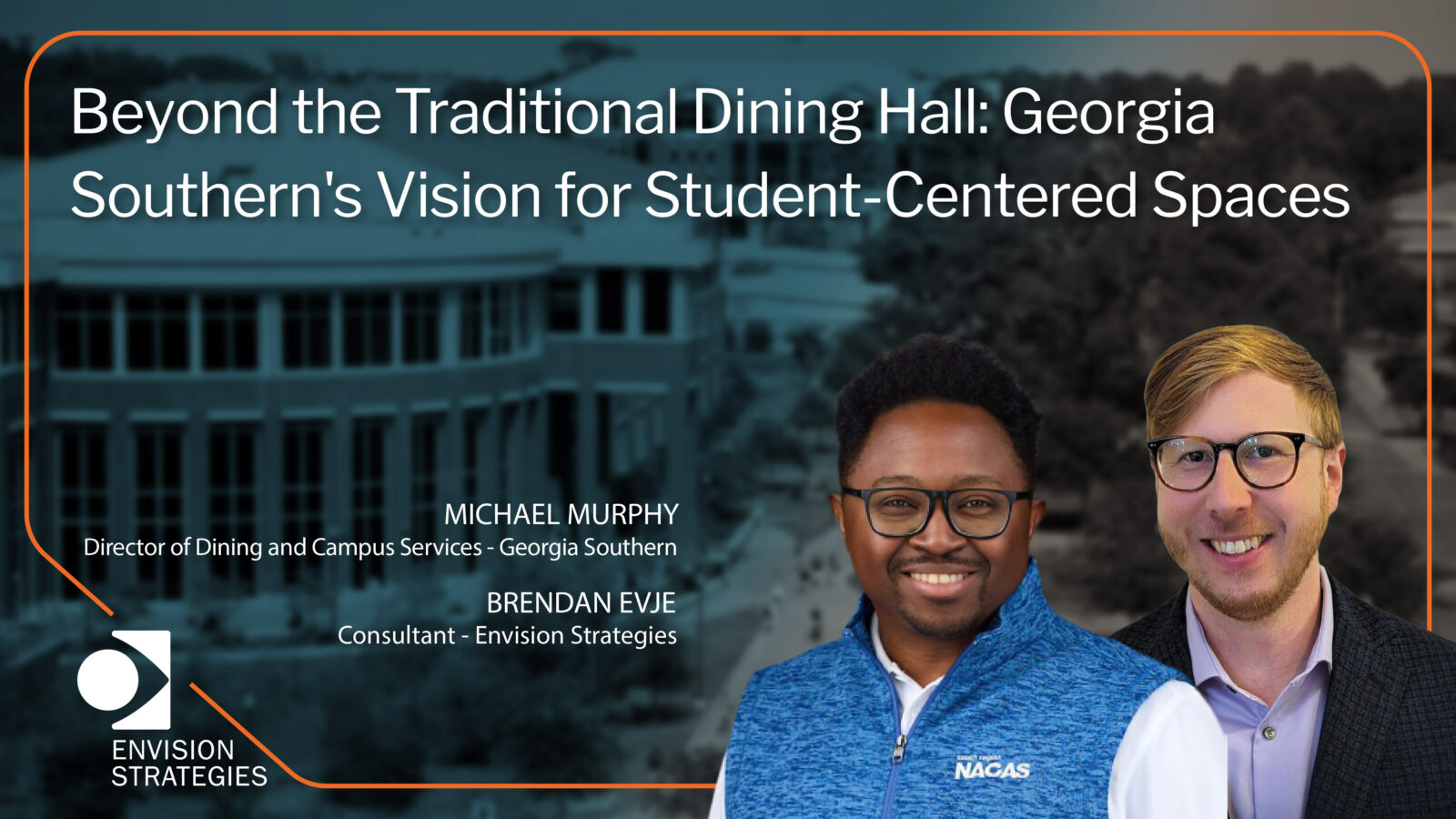
Featured Interview: Michael Murphy, Georgia Southern University
Watch the Full Video Interview Here
The Three-Campus Challenge
Georgia Southern operates dining programs across three campuses: a large Statesboro campus serving over 20,000 students, a campus near Savannah with 6,000 to 7,000 students, and a smaller campus near Fort Stewart Army Base.
The self-operated program runs dining operations on the two residential campuses (Statesboro and Armstrong) serving about 10,000 students through their dining halls daily. Managing consistent quality and relevant offerings across multiple locations requires intentional strategy and regular student feedback.
Rethinking the Traditional Model
When asked what absolutely has to be different about dining facilities five years from now, Michael Murphy challenges the traditional construction approach.
“You make a space that’s a dining hall, and you kind of walk away from it,” Michael explains. “For several years, you would just build a residence hall and build a dining hall as part of it and keep going.”
That model is ending. The future belongs to student-centered spaces that serve broader purposes than single-function dining halls.
“The big thing for the future are student centers, building dining halls or dining spaces that are multifaceted,” Michael says. “They both have that residential dining experience, but they also have the retail and the convenience store aspect.”
This creates spaces where all students can go, not just residential students with meal plans. The multifaceted approach generates revenue across different service models while meeting varied student needs in a single location.
Listening to Students
Georgia Southern uses multiple channels to understand what students want. Surveys provide quantitative data. A student dining advisory board meets every semester, offering qualitative insights into student preferences and expectations.
“We use that as a method to gauge interest on different concepts, different brands students would be interested in seeing on campus, but also as a way to do a checkup on where we’re at, get a pulse on what’s going on,” Murphy explains.
The advisory board serves dual purposes: testing interest in potential new offerings and conducting regular assessments of current operations. Students tell Georgia Southern what’s working, what’s missing, and what they expect.
Beyond student feedback, Michael’s team also monitors professional organizations and peer institutions to understand emerging trends and best practices.
The Food Trends Driving Demand
When it comes to concepts students want, Asian cuisine dominates the conversation.
“Any Asian cuisine is at the top of the list,” Michael notes. “Your ramen, your pho, Indian, Korean barbecue, any kind of Korean chicken-related concept is really big right now.”
Beyond specific cuisines, bowls represent a format students consistently request. Asian bowls, Mediterranean bowls, anything bowl-related performs well because it’s quick and easy to obtain while allowing customization.
“Students having the ability to get things customized how they want is big,” Michael explains.
The customization element matters as much as the cuisine style. Students want control over their food choices, the ability to build meals matching their preferences and dietary needs.
What This Means for Campus Dining Leaders
Georgia Southern’s approach offers guidance for dining programs planning future facilities:
Single-function dining halls are becoming obsolete. Future facilities need to serve multiple purposes: residential dining, retail options, convenience store functions. Build spaces where all students feel welcome, not just those with meal plans.
Student input isn’t optional. Regular feedback mechanisms such as: surveys, advisory boards, pulse checks keep programs aligned with evolving preferences and expectations.
Look beyond your campus. Professional organizations and peer institutions provide valuable intelligence about emerging trends and successful models worth considering.
Global cuisines and customization define current demand. Asian cuisine concepts and bowl formats allowing personalization consistently rank high in student preferences.
Revenue diversification matters. Multifaceted spaces generate income from residential meal plans, retail transactions, and convenience store sales rather than depending on a single revenue stream.
Building for How Students Actually Live
The traditional model of building a residence hall with an attached dining hall served a simpler time when campus populations were more homogeneous and student expectations more uniform.
Today’s students live differently. Residential students want retail convenience. Commuter students want gathering spaces. All students want customization, global flavors, and environments that feel welcoming regardless of their housing or meal plan status.
Georgia Southern’s vision of student-centered, multifaceted dining spaces responds to that reality. Five years from now, success won’t look like traditional dining halls serving traditional populations. It will look like integrated spaces serving diverse students in ways that reflect how they actually want to experience campus dining.