Reading Time: 2 minutes
Key Topics: Student Experience, Feedback Collection, Auxiliary Services
Featured Interview: Jackson Mathews, AVP of Auxiliary Services, William & Mary
Watch the Full Video Interview Here
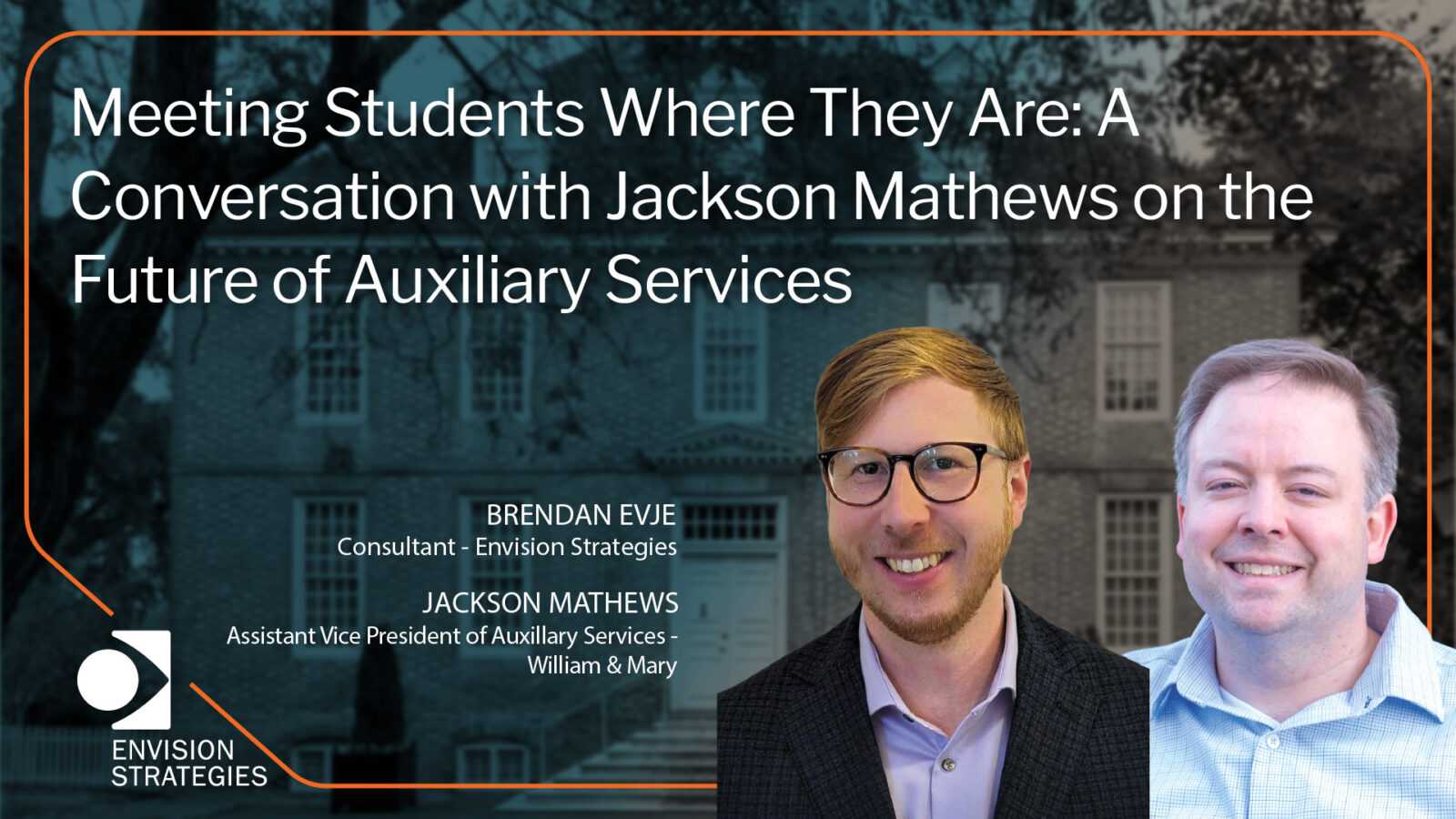
At the NACAS C3X Annual Conference , Envision Strategies consultant Brendan Evje sat down with Jackson Mathews, AVP of Auxiliary Services at William & Mary, for a quick conversation on the floor of the conference.
The exchange was brief, but it touched on two questions that sit at the center of nearly every auxiliary services program: how do you improve the student experience, and how do you know if you’re actually reaching students in the first place?
Customer Service as the Starting Point
Asked about the biggest opportunity to improve student experience in auxiliary services today, Mathews didn’t point to a new technology or a facilities upgrade. He pointed to fundamentals. “I think it’s pretty fundamental, and it starts with customer service,” he said. For Mathews, that means paying close attention to how incoming generations of students actually live and want to engage, and adjusting campus spaces accordingly rather than expecting students to adapt to existing structures.
He framed the work in terms of community building. Auxiliary services teams may not be standing in front of a classroom, but they shape the spaces where students spend much of their time outside it. “We provide them with a lot of the spaces to be able to engage and really flourish on campus,” Mathews noted. The goal, as he put it, is helping students feel like campus is their community so they can thrive in it.
The Ongoing Challenge of Feedback
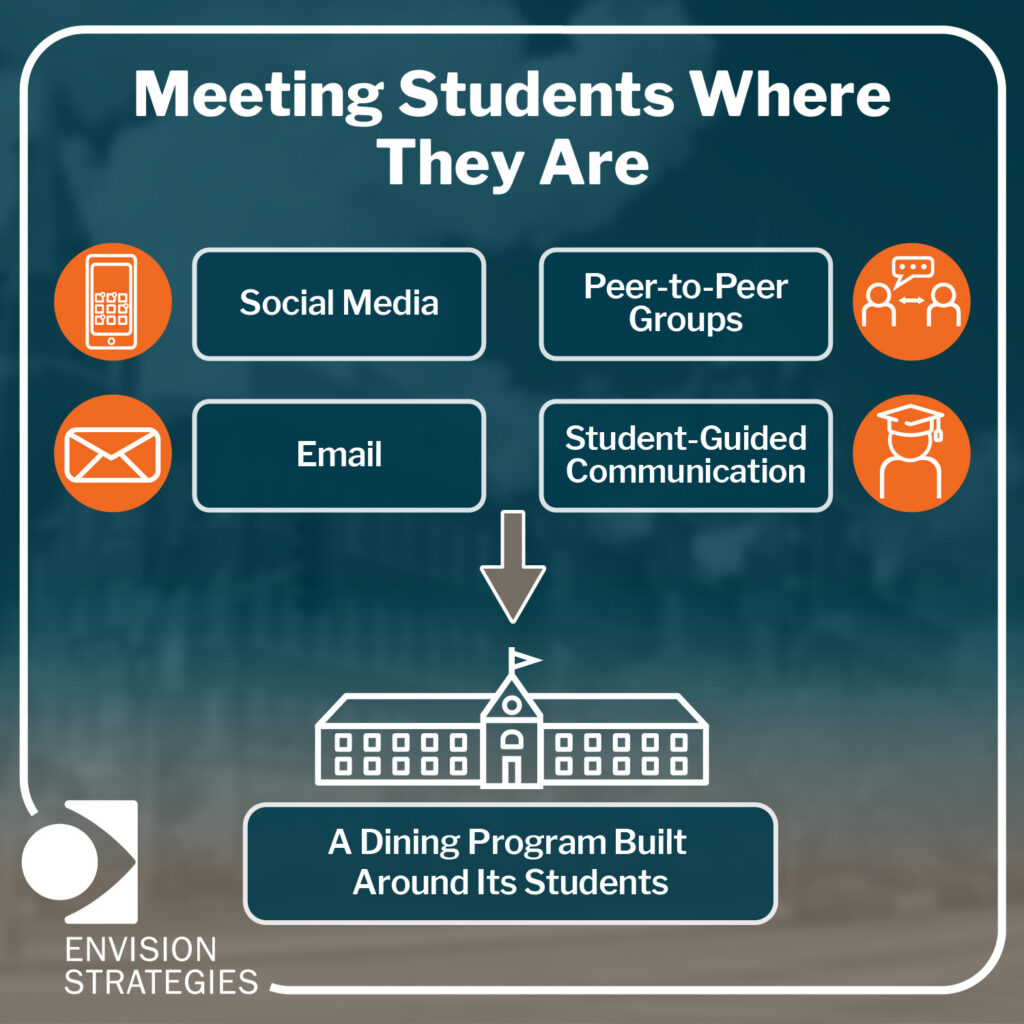
The second question, how best to gather student feedback, drew a more candid answer. Mathews admitted there’s no single formula. His team relies on a mix of channels: social media, peer-to-peer groups, and email communication, while constantly trying to calibrate how much outreach is too much. “It’s also finding that fine line of communicating enough, but then not communicating so much that it becomes white noise,” he said.
That balance, he acknowledged, shifts from campus to campus. There’s no universal playbook for reaching students effectively. Instead, Mathews described a posture of ongoing adjustment, leaning into the student population to let them help guide the communication strategy rather than imposing one from the top down.
Key Takeaways
- There is no one-size-fits-all approach. Every campus population is different, and auxiliary leaders need to stay attentive to their own community’s preferences.surface.
- Student experience improvements start with customer service fundamentals, not necessarily new programs or infrastructure.
- Understanding how each new generation of students lives and engages should directly shape how campus spaces are designed and used.
- Feedback strategies should combine multiple channels, including social media, peer groups, and email, rather than relying on one method.
- Communication frequency requires constant calibration. Too little leaves students uninformed; too much becomes noise they tune out.