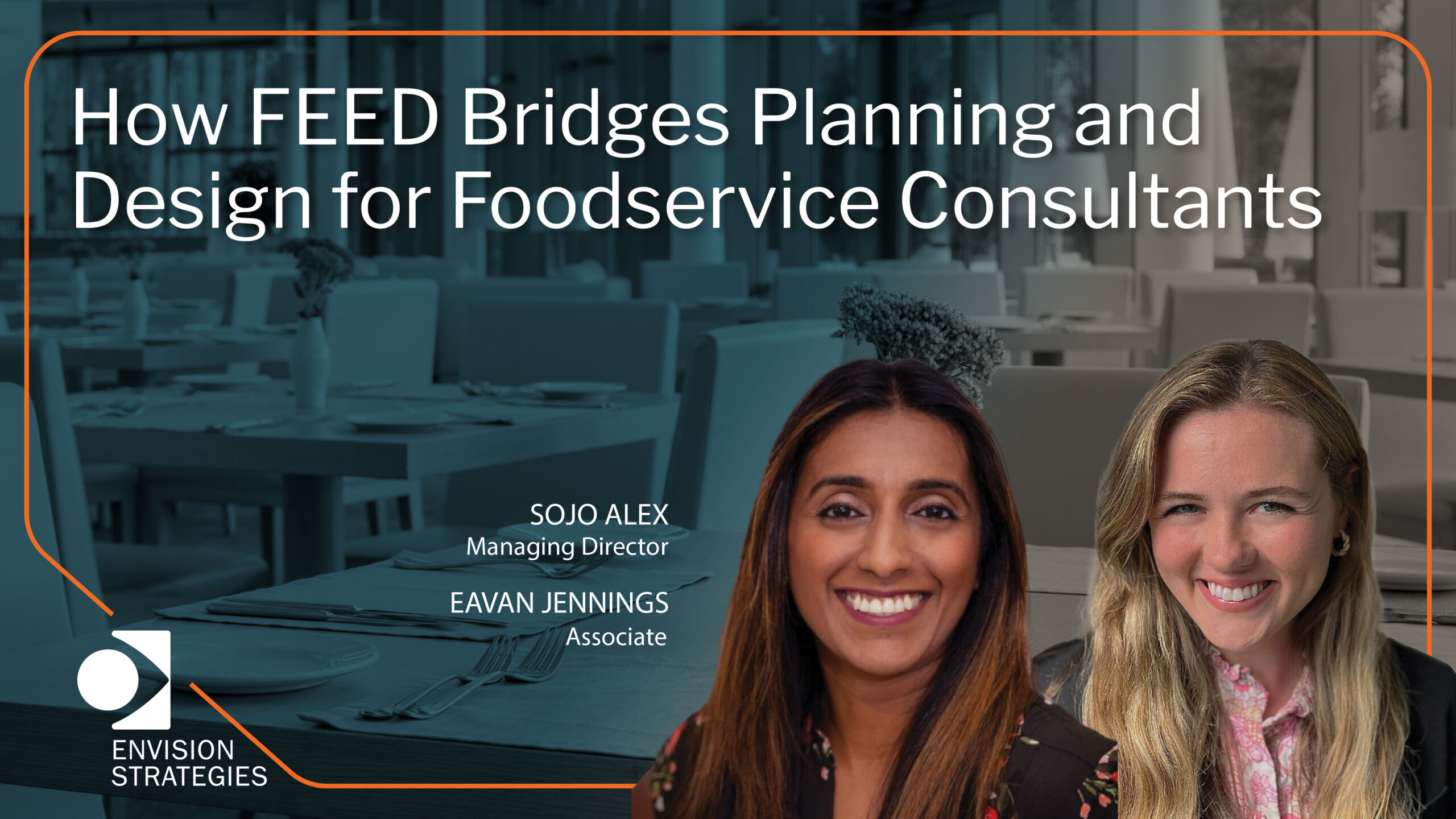
For Sojo Alex and Eavan Jennings of Envision Strategies, attending FEED wasn’t just a professional development checkbox. It was a chance to complete a circle that their day-to-day work in master planning and operations consulting leaves open…the part of the process that happens after the handoff.
Sojo is a seasoned MAS consultant who has been bringing clients and colleagues to FEED for three years running. Eavan, newer to the consulting world, was an attendee experiencing the workshop for the first time. Together, they came with a shared goal: to better understand what happens on the design side once their work is done.
“We work on a lot of dining master planning projects,” Sojo explains. “So, this is good to see everything that designers navigate once planning is complete; the details and decisions that unfold long after we’ve stepped back from the process.”
For Eavan, the experience was about filling in knowledge gaps she had long been aware of. “I really wanted to understand the background of how we get from start to finish on a project,” she says. “I knew very little about design going in.”
The Moment Things Click
One of the most telling aspects of FEED is how it moves participants from abstract understanding to genuine comprehension, and it often happens faster than people expect.
Eavan describes a specific turning point during the workshop: the moment she understood what a clean handoff from planning to design actually looks like in practice.
“The big ‘aha’ for me was seeing that handoff from where we are coming up with our ideas, to how the designer picks it up,” she says. “It was so nice to see that a designer isn’t completely starting from scratch when they have a management advisory services (MAS) study behind them. All of that work has already processed what the client needs. That was a huge moment.”
Year after year as a mentor, Sojo watches the same realization dawn.”A lot of people glaze over at first because they don’t understand the high-level planning side,” she says, “but then we do the visioning exercise, and that’s when it ‘clicks’. They realize that vision, staffing, funding and programming all have to come before we even get to a footprint.”
What You Get When Every Seat at the Table is Filled
The FEED model puts consultants, operators, and manufacturers in the same room at the same time. That combination produces something that single-discipline training simply cannot replicate.
Eavan points to a different dimension of that cross-pollination: the freedom to ask questions openly. “It’s a safe space where you can ask the questions that you maybe don’t want to ask when you’re actually on a project,” she says. “You can say, how do you handle this? How do you handle that? And it’s so nice to hear different perspectives.”
Even the manufacturer sessions opened doors she didn’t expect. “I don’t get to see demos of self-cleaning hoods every single day,” Eavan notes. “Understanding the mechanics of the equipment, even though we’re not the ones specifying it, means we can make better recommendations to clients.”
The Networking You Can’t Manufacture at a Large Conference
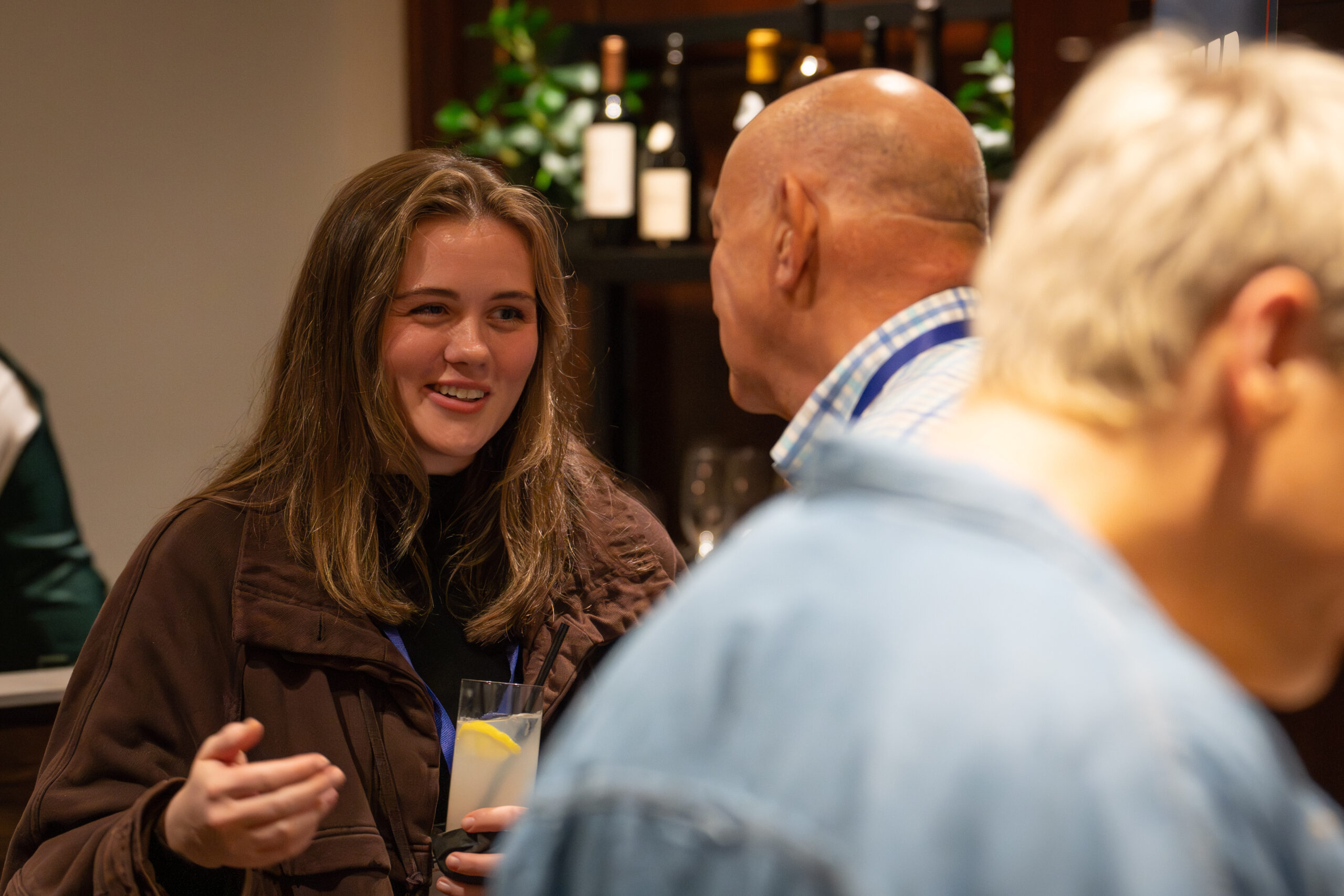
Ask anyone who has been to FEED about the networking, and the word that comes up repeatedly is “intimate.”
FEED’s small group format means that by the end of the workshop, you don’t just have a stack of business cards, you have actual relationships. You know what people work on, how they think, what challenges they carry. That depth of connection is rare in an industry full of large trade shows and crowded conference floors.
“It felt more intimate in terms of size,” Eavan says. “You could really get to know the people who were with you, and you could go around and have a personal conversation with everybody in the room. You don’t get to do that at other larger conferences.”
She came home with more than contacts. “I walked away with friends that I am going to keep up with, and have already emailed, texted, and talked to since coming home.”
Sojo has watched that dynamic play out in practical, business-generating ways and she has made it a cornerstone of how she frames FEED to her own clients. “Now that you’ve completed your dining planning, you need to start asking the right questions,” she says. “Come to FEED. Learn how to advocate for yourselves and how to work with an architect, dealers and manufacturers. This is how we stay with you through the next part of the process.”
A Different View of Your Own Colleagues
One unexpected outcome of attending FEED together was what Sojo and Eavan each discovered about the other.
For Sojo, the experience offered an unexpected revelation about Eavan who she thought she knew well. Seeing Eavan navigate a structured professional environment, presenting with confidence, engaging with her network, and already thinking about how to bring her takeaways to the whole team, left a clear impression with her as a mentor.
For Eavan, watching Sojo mentor solidified something about her own path. “I don’t get to see her present every single day. It’s so nice to hear her perspective and see how she gives a thorough but accessible overview of MAS consulting to people who have never seen inside it before.” She laughs thinking back on it. “It also confirmed for me that I picked the right profession. When we got to the MAS section, I was like, yes this clicks with me completely. This is what I’m passionate about.”
The Case for Sending Your Team
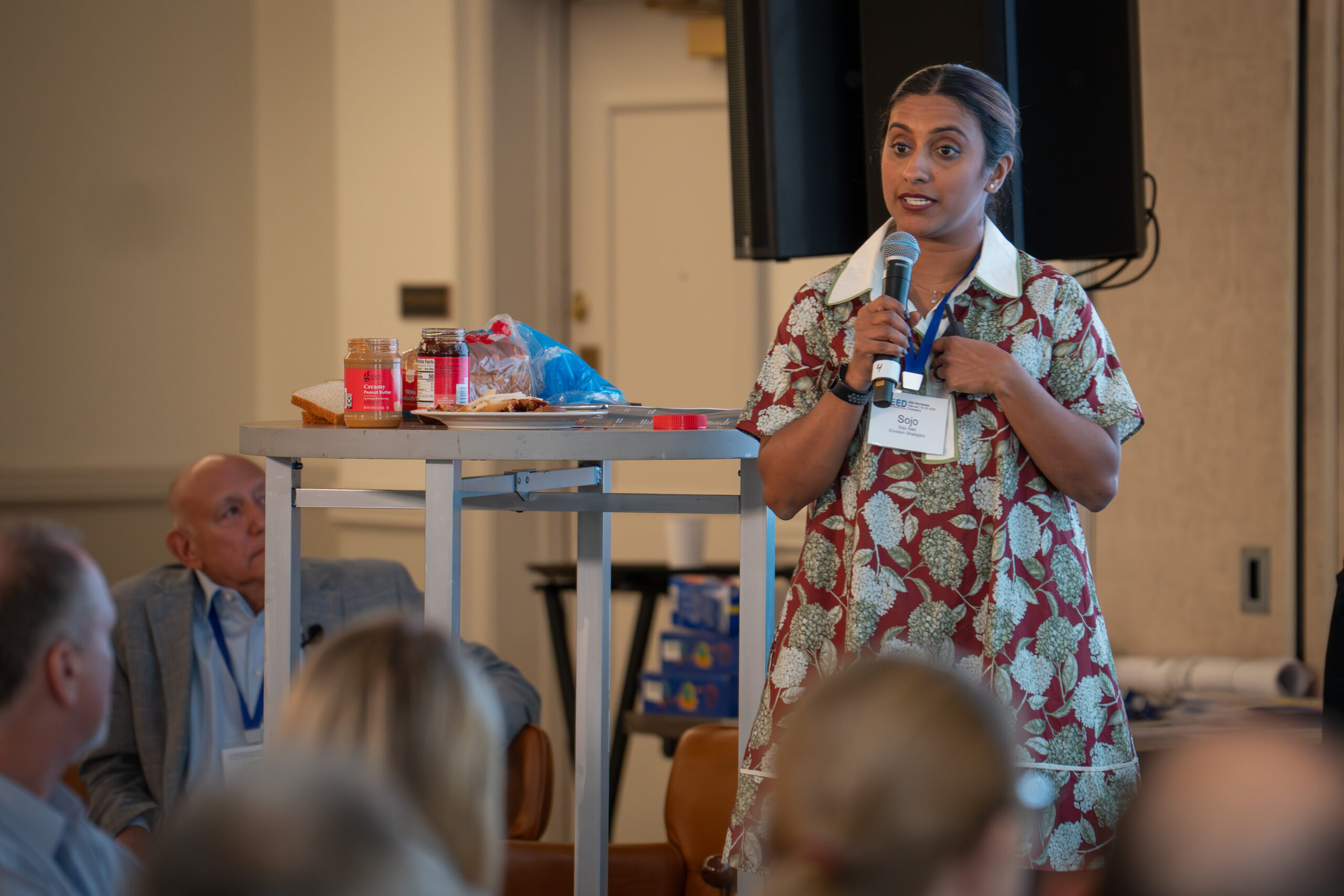
For firms weighing whether to invest in sending a team member to FEED, Sojo makes the argument simply and directly.
“For newer members of my team, it helps them understand more about the full process,” she says.
Eavan’s advice for first-timers is equally direct. Come ready to be pushed outside your comfort zone. She spent both workshop days working on hospital scenarios rather than the higher education settings she knows well and that stretch turned out to be where much of her growth happened.
“I was really happy that I had a team both days who were pushing toward the option I wouldn’t have chosen,” she says. “I learned so much more because of that.”
FEED is not the kind of professional development that fades into the background a week after you return to your desk. For Sojo and Eavan, it sharpened the vocabulary they use with architects, deepened their understanding of the design phases that follow their own work, and connected them to a circle of people they are still in touch with regularly.
That, in the end, might be the best summary of what FEED is: the rare event where the education sticks and the relationships last.
Follow FEED Workshop on LinkedIn for updated info on FEED 2027.