Reading Time: 3 minutes
Key Topics: Operational Consistency, Staffing Challenges, Quality Control, Student Experience
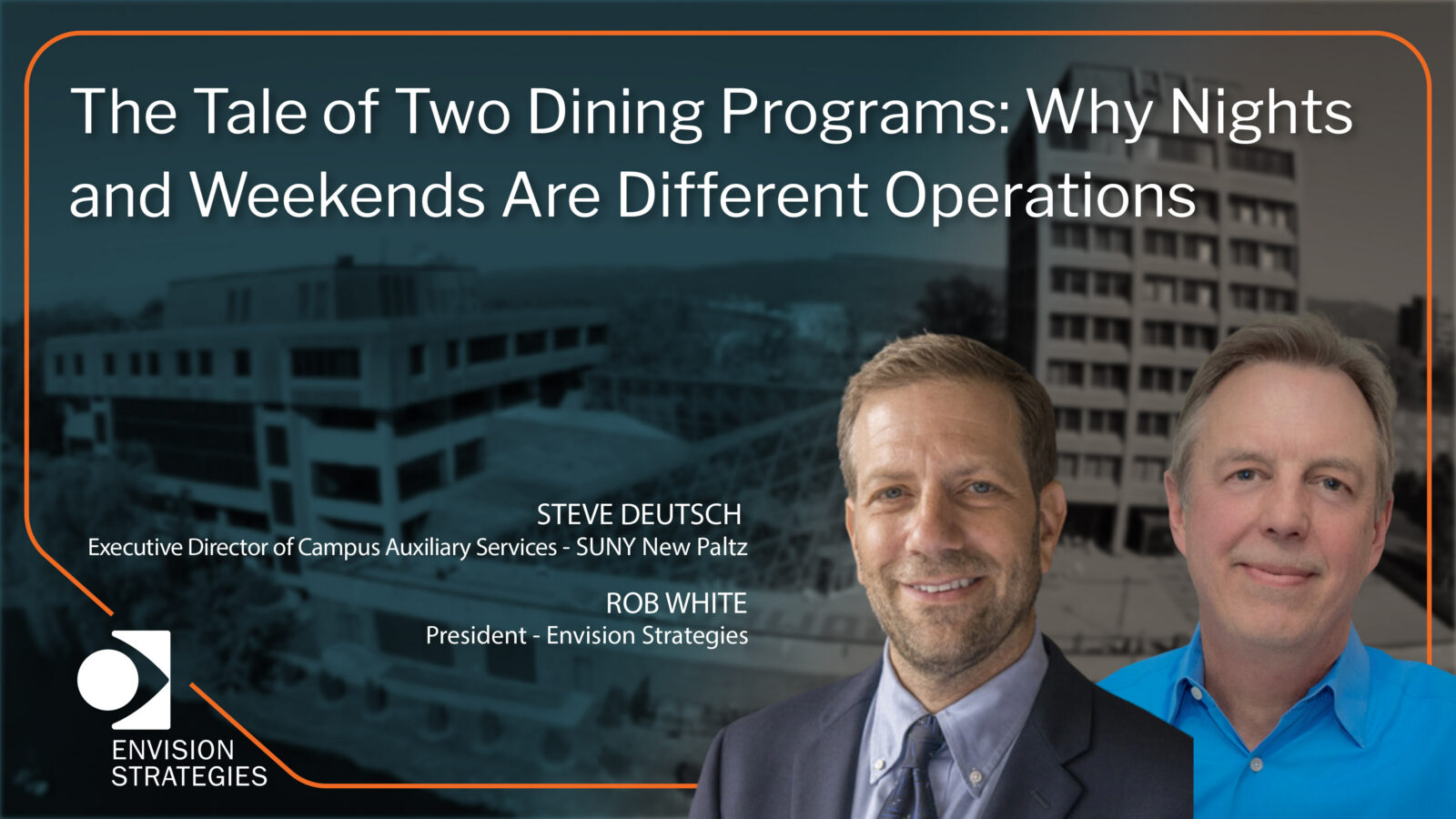
Featured Interview: Steve Deutsch, SUNY New Paltz
Watch the Full Video Interview Here
The Seven-Day Challenge
SUNY New Paltz operates dining services seven days a week, from early morning to late evening. Like most campus dining programs, maintaining consistent operations across all those hours presents ongoing challenges.
For Steve Deutsch, the operational challenge he’d fix with a magic wand is clear: ensuring operations run smoothly throughout all operating times, without lulls, breaks, or periods where operations aren’t well-tended and well-cared for.
“The biggest challenge in doing that is making sure that operations are smooth throughout all of those operating times,” Deutsch explains.
New Paltz is halfway to solving the problem. They’re gathering real-time feedback from students on weekends and at night, understanding what operations look like during those hours. The data collection works*. The magic wand would ensure staff are fully on top of those issues and reacting in real time.
*SUNY New Paltz is a current member of the Envision360 Audit Program created by Envision Strategies
The Staffing Reality
Solving operational consistency requires both adequate staffing levels and staff quality. Neither comes easily.
“It’s a challenge to find quality food service employees in all parts of the country,” Deutsch notes. At New Paltz, the high cost of living compounds the challenge. Finding people who are dedicated and attuned to operational needs proves difficult.
Even when you manage to build a full, well-trained staff, keeping them focused on what matters throughout all hours of operation remains challenging. The staffing problem isn’t just about numbers. It’s about sustained attention to quality and consistency across varying conditions and supervision levels.
A Tale of Two Cities
Deutsch describes the contrast vividly: “It’s A Tale of Two Cities in a way. I can walk around Monday through Friday and see that everything is operating good, everything looks well, all of the food is being replenished, all the tables are clean in all of our operations.”
Then the reports and surveys arrive showing what happens nights and weekends. The difference is stark.
“It’s hardest to find people to work those shifts. It’s hardest to supervise them,” Deutsch explains. “It’s hardest because there’s less administration, less management around during those times.”
The cruel irony? Those challenging-to-staff hours are precisely when students most need quality food service. Nights and weekends are peak utilization times. When operations struggle most is when students depend on them most.
The Supervision Gap
The Monday-through-Friday daytime experience benefits from administrative and management presence. Leaders walk operations, observe conditions, course-correct in real time. Staff know supervisors are present and engaged.
Nights and weekends operate differently. Fewer managers on duty. Less oversight. Staff working more independently with less immediate support and feedback. The operational culture shifts when leadership presence diminishes.
This creates a consistency challenge that technology alone can’t solve. Real-time student feedback identifies problems. But if staffing patterns, supervision coverage, and operational support differ dramatically between daytime weekdays and nights/weekends, the data reveals issues without providing the infrastructure to address them consistently.
What This Means for Campus Dining Leaders
New Paltz’s experience reflects what many campus dining programs face:
Data collection is necessary but insufficient. Understanding when and where problems occur matters. But knowing the problem and having the staffing and supervision to fix it are different challenges.
The hours students most need you are the hardest to staff. Peak student utilization doesn’t align with easiest staffing periods. This fundamental mismatch requires intentional strategy, not hoping good daytime staff will naturally extend to nights and weekends.
Supervision presence directly impacts quality. Operations perform differently when management is present versus absent. If your leadership team works primarily Monday through Friday daytime, your operations will reflect that pattern.
Consistency requires consistent infrastructure. Similar staffing levels, similar supervision ratios, similar management presence across all operating hours. Different infrastructure creates different results.
The Path Forward
Deutsch acknowledges they’re halfway there with data collection showing the gaps. The next half involves building operational infrastructure that supports consistent quality across all hours.
That likely means reconsidering management schedules to ensure leadership presence during high-volume nights and weekends. It means building staffing models that don’t treat nights and weekends as secondary shifts. It means supervision ratios that support staff working during hours when fewer managers are available.
The magic wand would make this easy. Reality requires systematic changes to how operations are supervised, staffed, and supported across the full seven-day, early-morning-to-late-evening schedule.
For campus dining programs running similar operations, that’s the challenge: building infrastructure that supports consistent quality whenever students need you, not just when it’s easiest to provide it.