Reading Time: 4 minutes
Key Topics: Capital Investment, Change Management, Self-Operation Transition, Strategic Planning
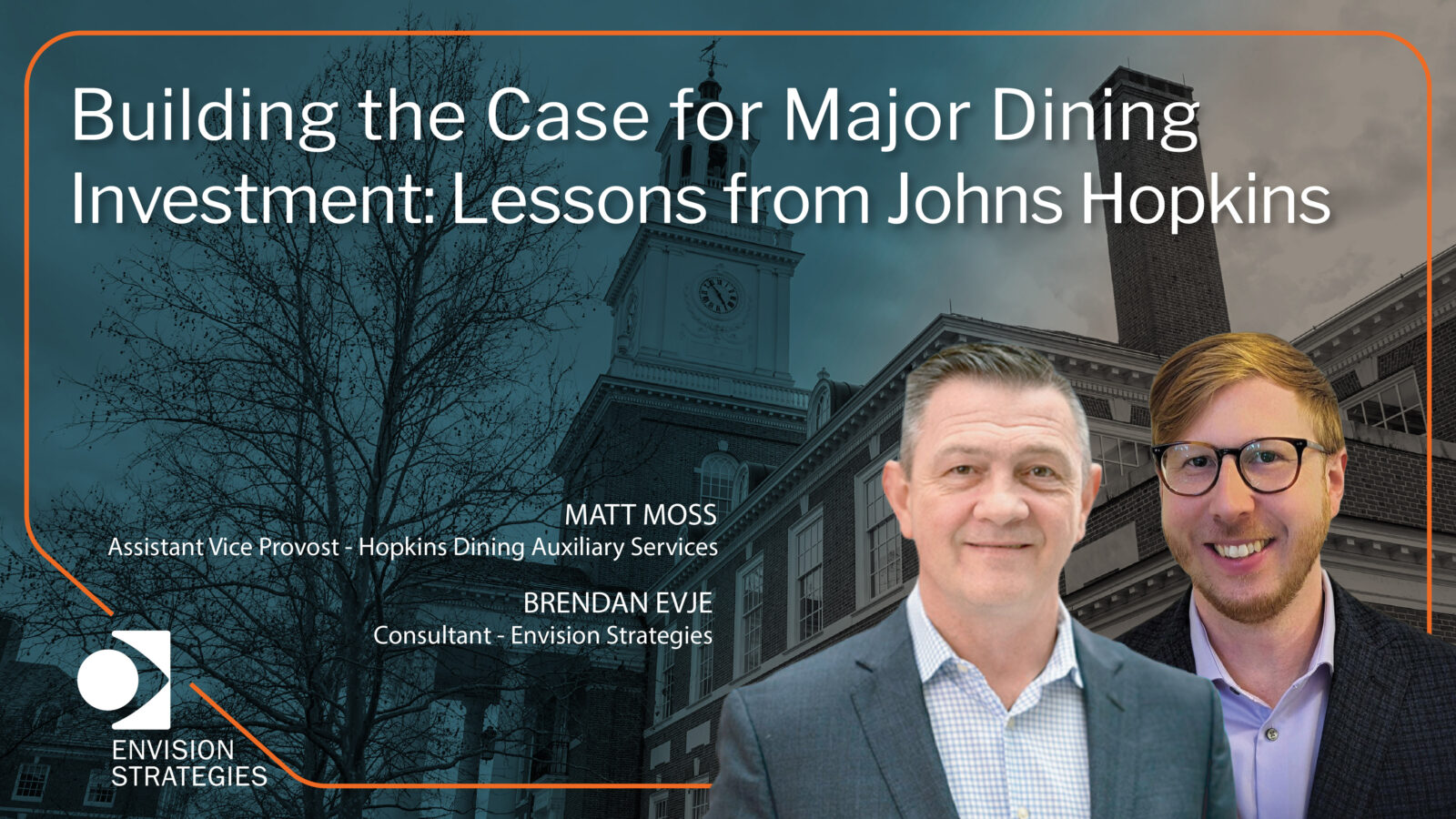
Featured Interview: Matt Moss, Johns Hopkins University
Watch the Full Video Interview Here
The Hopkins Transformation
Four years ago, Johns Hopkins University made a major decision: transition from contract management to self-operated dining. Three years into operations, the campus is now in what Matt Moss describes as a “major investment phase.”
The university is updating the entire campus dining program, from residential to retail, while actively seeking new opportunities. This isn’t incremental improvement. It’s a comprehensive transformation.
For auxiliary leaders contemplating similar investments, Hopkins’ journey offers valuable lessons about building the case for change and managing the transitions that follow.
The Well-Constructed Plan
When asked what advice he’d give auxiliary leaders trying to justify major investment to administration, Moss emphasizes preparation.
“The most important thing is to really come with a well thought out, constructive plan,” Moss explains. “Really going into the process of showing the pros, the cons, how the program will develop beyond that and understanding the benefits of investing into the future.”
This isn’t about creating a pitch deck. It’s about building a comprehensive case that acknowledges challenges alongside opportunities and demonstrates understanding of long-term implications.
Beyond the Financial Case
Hopkins recognizes something fundamental: dining is more than a revenue stream.
“Dining is a core part of the student experience and really drives the culture,” Moss notes. “It becomes a gathering space for students, not just a place to feed your body, but somewhere that really can enhance the overall student experience.”
When presenting investment proposals to senior leadership and boards of trustees, the financial projections matter. Revenue growth potential matters. But the student experience case carries equal weight.
“Coming with a plan that really outlines what those benefits are, not just the financial needs and the ability to grow your revenues, is an important part,” Moss says.
The message to leadership needs to balance operational sustainability with mission alignment. Both are essential.
The Change Management Challenge
Major investments create major transitions. At Hopkins, those transitions affect multiple constituencies across campus.
“Change management is very hard,” Moss acknowledges. “It’s not only hard for the people who are planning these changes, but it’s really those who are impacted by it.”
That impact extends beyond dining operations. Athletic programs, student affairs, academic departments all experience effects from major dining transformations. Understanding and addressing the “why do we need to do this?” question becomes essential across all these relationships.
The Hourly Staff Reality
One constituency deserves particular attention during major facility renovations: hourly staff.
“Understanding the change management when you take old buildings, the impact that it has on your hourly staff, and how they are gonna have to adjust to the new things that they’re getting,” Moss explains.
New equipment works better. New facilities function more reliably. Those improvements benefit staff. But the adjustment period is real. Staff must learn new systems, adapt to new workflows, and navigate unfamiliar spaces.
“As much as they may be appreciative of things that now work all the time, it really can have an impact on what they’re doing each and every day,” Moss notes.
Acknowledging this reality and supporting staff through transitions demonstrates that the investment includes investing in the people who make operations successful.
What This Means for Auxiliary Leaders
Hopkins’ experience offers a framework for auxiliary leaders pursuing major investment:
Build comprehensive cases, not simple pitches. Show you’ve thought through challenges, not just opportunities. Demonstrate understanding of long-term development, not just immediate impact.
Balance financial and experiential arguments. Revenue matters, but mission matters equally. Show how investment serves both.
Map the ripple effects. Major dining changes affect athletics, student affairs, academics, and more. Understand those impacts and address them proactively.
Don’t underestimate staff adjustment periods. Better facilities and equipment create better working conditions, but transitions require support and patience.
Prepare for persistent “why” questions. Change creates skepticism. Having clear, compelling answers ready matters across all stakeholder groups.
Investment as Strategy
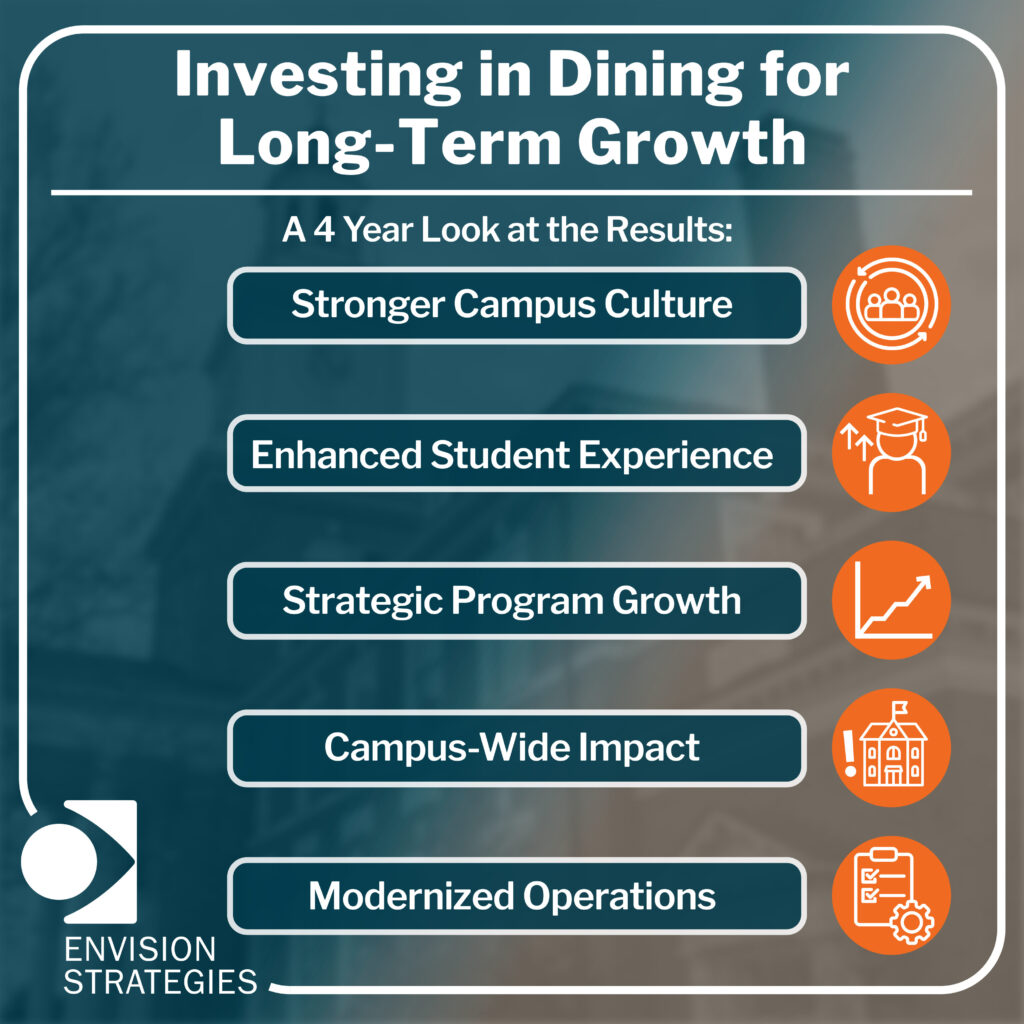
What Johns Hopkins demonstrates is that major dining investment isn’t just about facilities and equipment. It’s strategic positioning of dining as central to student experience and campus culture.
Four years into their transformation, Hopkins continues investing comprehensively across their program. That sustained commitment reflects confidence in the strategic case they built and the change management approach they’re executing.
For auxiliary leaders contemplating similar paths, that’s the roadmap: build thorough cases, acknowledge real challenges, support people through transitions, and maintain focus on how dining serves institutional mission alongside operational sustainability.
About the Conversation:
This reflection draws from a conversation with Matt Moss, Johns Hopkins University, conducted by Brendan Evje, Consultant at Envision Strategies, at the 2025 NACAS national conference.