Reading Time: 3 minutes
Key Topics: Student Retention, Belonging, Enrollment Challenges, Strategic Investment
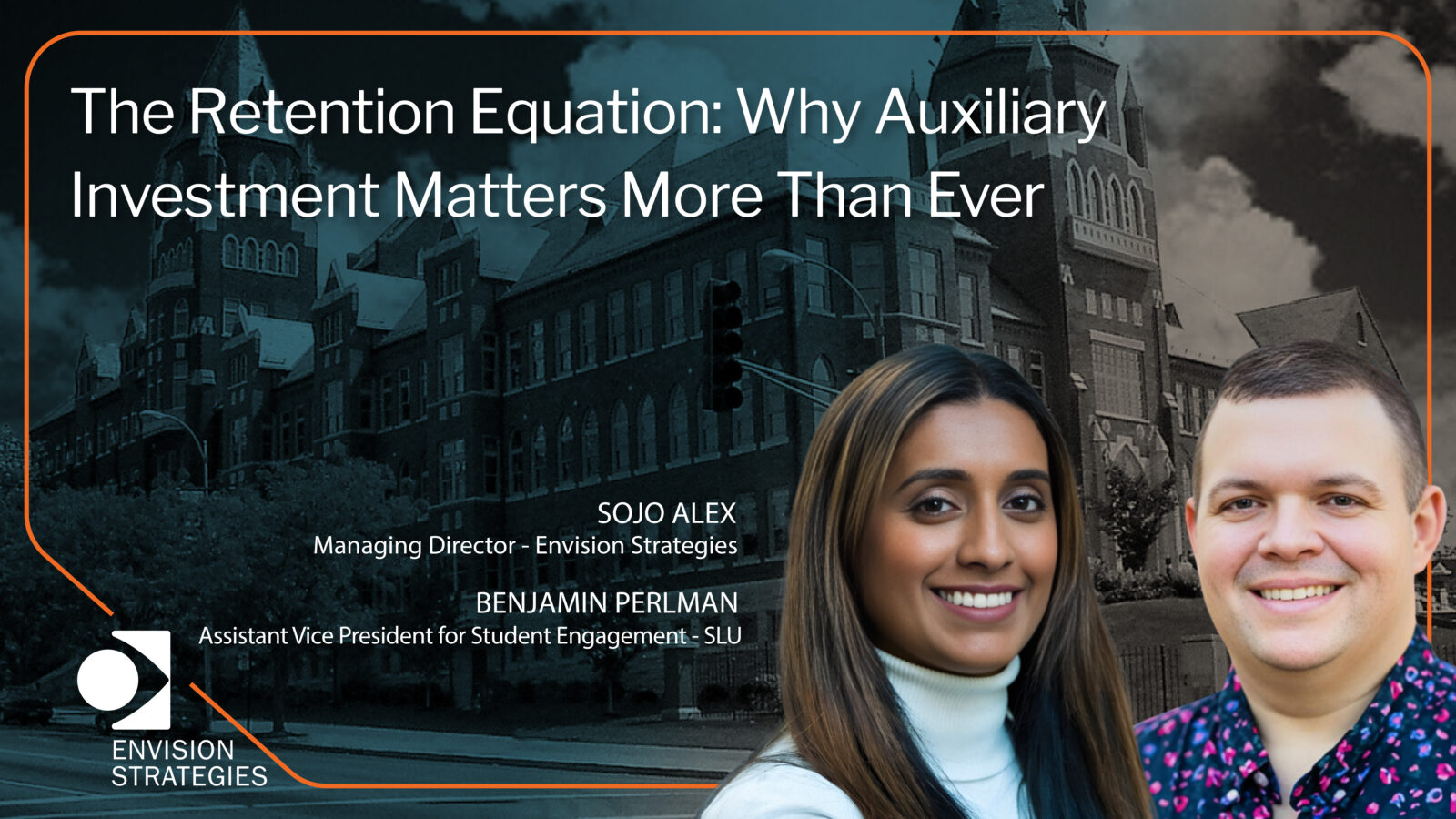
Featured Interview: Ben Perlman, St. Louis University
Watch the Full Video Interview Here
The SLU Context
St. Louis University is a Catholic Jesuit institution serving about 15,000 students in downtown St. Louis. The urban campus operates with a 50/50 split between graduate and undergraduate students across 12 different colleges, from aviation and engineering to nursing and medicine.
The dining program runs contracted, with a single board location serving 4,000 residential beds, about 16 retail locations, two convenience stores, and a substantial vending operation.
For Ben Perlman, the auxiliary services portfolio reflects a broader strategic reality. At most institutions, auxiliary investment directly addresses higher education’s most critical challenge: student retention.
The Retention Reality
When asked what advice he’d give someone in auxiliary services trying to justify major investment to administration, Perlman doesn’t talk about amenities or competitive positioning.
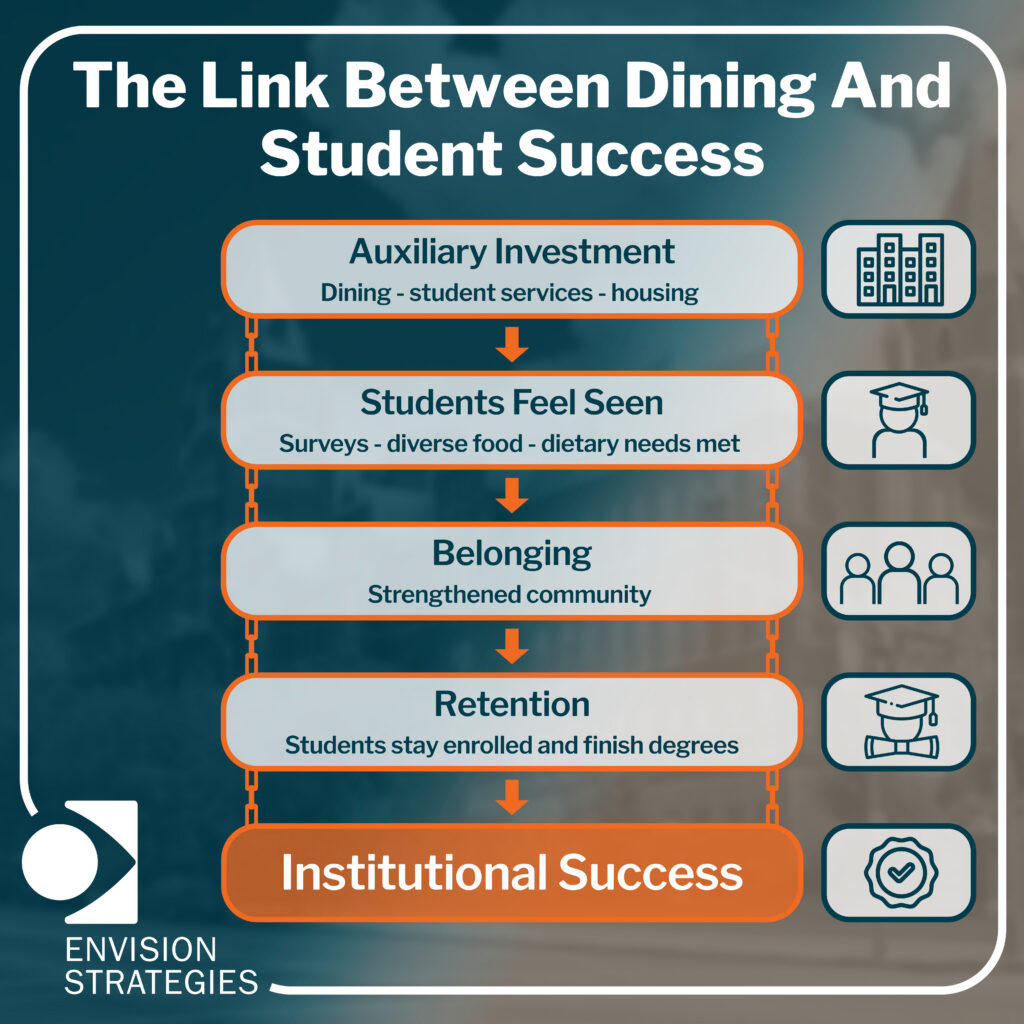
“It’s about retention,” Perlman explains. “We draw the line from retention to belonging, belonging between students, and belonging in a sense of affinity to the institution.”
At SLU, students don’t leave because of grades. They have exceptional students who become satellite engineers, pilots, nurses, and doctors. Students leave because they don’t feel like they’re part of a community or they don’t feel like SLU is a place for them.
“Investment in auxiliaries, particularly where you can build community—dining, residence halls, student centers, and hopefully hybrids of those things—are where you can get the most bang for your buck,” Perlman says.
Dining as Identity Validation
Perlman emphasizes something fundamental about dining’s role in student belonging: “Dining is part of how we validate students’ identity.”
Feeling seen matters. A diverse food path matters. Meeting dietary needs matters. These aren’t nice-to-have amenities. They’re essential components of making students feel they belong.
“If the facility investment, the equipment investment, the people investment aren’t there, then we’re not gonna make students feel like they belong, which means they’re not gonna retain,” Perlman notes.
Given current demographics and enrollment challenges across higher education, retention becomes a key strategic issue. Auxiliary investment isn’t peripheral to institutional strategy. It’s central to it.
The Enrollment Volatility
SLU’s goal is steady enrollment. On the undergraduate side, they’re mostly meeting those goals and consider themselves fortunate compared to institutions struggling more significantly.
But the graduate student side tells a different story. International graduate enrollment has experienced dramatic swings: 200 students annually before the pandemic, 1,200 new international graduate students in 2022, and only 100 this year.
The AI revolution is reshaping program demand in real time. Graduate programs in computer science are tanking while AI studies skyrocket. SLU’s intelligence studies program focused on AI is experiencing explosive growth.
“You have to recruit faculty and infrastructure to build those programs because students don’t wanna be programmers anymore. They wanna learn about AI,” Perlman explains.
This volatility requires what Perlman calls becoming “more aerodynamic, more flexible” with programs. Institutions must respond rapidly to shifting student interests and market demands.
The Master Planning Response
SLU is currently conducting a campus life facilities master plan—a hybrid approach covering housing, student center (including most dining), and recreation. After allowing spaces to deteriorate over recent years, the university is determining how to spend available dollars most wisely over the next five years.
The process began with a program review Envision Strategies conducted. “Here are the gaps. Here’s where the benchmarking doesn’t make sense. How do we close these gaps?” Perlman describes.
This represents strategic thinking about limited resources: not what you’d do with unlimited budget, but how to maximize impact with available investment to address the most critical needs.
What This Means for Auxiliary Leaders
SLU’s experience offers a framework for making the investment case:
Connect auxiliary investment directly to retention. This isn’t about amenities. It’s about whether students feel they belong. Retention is the business case.
Frame dining as identity validation. Students need to feel seen. Diverse food offerings and meeting dietary needs aren’t extras. They’re fundamental to belonging.
Acknowledge that exceptional academics aren’t enough. Students leave great institutions not because of poor education but because they don’t feel community connection.
Given demographic realities, retention is strategic priority. Every institution should be evaluating how auxiliary spaces and services contribute to student belonging and retention.
Master planning helps prioritize limited resources. You can’t fix everything. Strategic assessment identifies where investment creates greatest impact on retention and belonging.
The “Belonging” Investment
What Perlman articulates is that auxiliary services aren’t support functions peripheral to academic mission. They’re central to whether students stay and complete degrees.
The line from auxiliary investment to retention runs through belonging. Students who feel seen, who find community, who experience spaces that validate their identity are students who persist.
That’s the case auxiliary leaders need to make: not that students deserve nice things, but that institutional success in recruiting and retaining students depends fundamentally on whether auxiliary services create environments where students feel they belong.